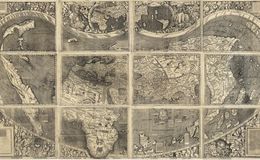
When Columbus made landfall in 1492, he thought he had discovered the eastern part of Asia or the East Indies. He continued to believe this until his death in 1506. The explorer Amerigo Vespucci participated in at least two voyages between 1494 and 1504, to both North and South America. He contended that the land that was discovered was a new continent and not Asia. In 1503 and 1505, two widely read books were published by Vespucci, stating his claim that the "new world" was indeed new and not Asia. Seen in that light, it would make sense that Waldseemüller, just two years later, in 1507, would thank Vespucci for his discovery of the "new world."
1
When Columbus made landfall in 1492, he thought he had discovered the eastern part of Asia or the East Indies. He continued to believe this until his death in 1506. The explorer Amerigo Vespucci participated in at least two voyages between 1494 and 1504, to both North and South America. He contended that the land that was discovered was a new continent and not Asia. In 1503 and 1505, two widely read books were published by Vespucci, stating his claim that the "new world" was indeed new and not Asia. Seen in that light, it would make sense that Waldseemüller, just two years later, in 1507, would thank Vespucci for his discovery of the "new world."
Dot #: 2
Author: tomadmin
Image ID: 355
When Columbus made landfall in 1492, he thought he had discovered the eastern part of Asia or the East Indies. He continued to believe this until his death in 1506. The explorer Amerigo Vespucci participated in at least two voyages between 1494 and 1504, to both North and South America. He contended that the land that was discovered was a new continent and not Asia. In 1503 and 1505, two widely read books were published by Vespucci, stating his claim that the "new world" was indeed new and not Asia. Seen in that light, it would make sense that Waldseemüller, just two years later, in 1507, would thank Vespucci for his discovery of the "new world."
2
When Columbus made landfall in 1492, he thought he had discovered the eastern part of Asia or the East Indies. He continued to believe this until his death in 1506. The explorer Amerigo Vespucci participated in at least two voyages between 1494 and 1504, to both North and South America. He contended that the land that was discovered was a new continent and not Asia. In 1503 and 1505, two widely read books were published by Vespucci, stating his claim that the "new world" was indeed new and not Asia. Seen in that light, it would make sense that Waldseemüller, just two years later, in 1507, would thank Vespucci for his discovery of the "new world."
Dot #: 3
Author: tomadmin
Image ID: 355
This is Ptolemy, who lived from 100 to 170AD and whose work became the foundation of modern day cartography, beginning in the late 15th century.


When Columbus made landfall in 1492, he thought he had discovered the eastern part of Asia or the East Indies. He continued to believe this until his death in 1506. The explorer Amerigo Vespucci participated in at least two voyages between 1494 and 1504, to both North and South America. He contended that the land that was discovered was a new continent and not Asia. In 1503 and 1505, two widely read books were published by Vespucci, stating his claim that the "new world" was indeed new and not Asia. Seen in that light, it would make sense that Waldseemüller, just two years later, in 1507, would thank Vespucci for his discovery of the "new world."
When Columbus made landfall in 1492, he thought he had discovered the eastern part of Asia or the East Indies. He continued to believe this until his death in 1506. The explorer Amerigo Vespucci participated in at least two voyages between 1494 and 1504, to both North and South America. He contended that the land that was discovered was a new continent and not Asia. In 1503 and 1505, two widely read books were published by Vespucci, stating his claim that the "new world" was indeed new and not Asia. Seen in that light, it would make sense that Waldseemüller, just two years later, in 1507, would thank Vespucci for his discovery of the "new world."
When Columbus made landfall in 1492, he thought he had discovered the eastern part of Asia or the East Indies. He continued to believe this until his death in 1506. The explorer Amerigo Vespucci participated in at least two voyages between 1494 and 1504, to both North and South America. He contended that the land that was discovered was a new continent and not Asia. In 1503 and 1505, two widely read books were published by Vespucci, stating his claim that the "new world" was indeed new and not Asia. Seen in that light, it would make sense that Waldseemüller, just two years later, in 1507, would thank Vespucci for his discovery of the "new world."
When Columbus made landfall in 1492, he thought he had discovered the eastern part of Asia or the East Indies. He continued to believe this until his death in 1506. The explorer Amerigo Vespucci participated in at least two voyages between 1494 and 1504, to both North and South America. He contended that the land that was discovered was a new continent and not Asia. In 1503 and 1505, two widely read books were published by Vespucci, stating his claim that the "new world" was indeed new and not Asia. Seen in that light, it would make sense that Waldseemüller, just two years later, in 1507, would thank Vespucci for his discovery of the "new world."
This is Ptolemy, who lived from 100 to 170AD and whose work became the foundation of modern day cartography, beginning in the late 15th century.
Wikipedia - Ptolemy
This is Ptolemy, who lived from 100 to 170AD and whose work became the foundation of modern day cartography, beginning in the late 15th century.
Wikipedia - Ptolemy