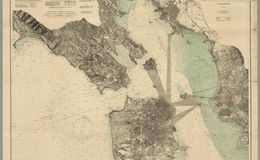
“When the idea of Golden Gate Park was first hatched, in the mid-1860's, the whole world scoffed: Everyone knew that the western half of San Francisco was an arid wasteland of barren sand dunes, upon which nothing could be made to grow. The Santa Rosa Press-Democrat, in 1873, wrote: "Of all the white elephants the city of San Francisco ever owned, they now own the largest in Golden Gate Park, a dreary waste of shifting sand hills where a blade of grass cannot be raised without four posts to keep it from blowing away..."...Fortunately, San Francisco ignored the conventional wisdom and set about the task of creating America's finest urban park. The two chief requirements were fertilizer and water; the latter was piped in and distributed with the help of the Dutch Windmill that still stands by the ocean near where John F. Kennedy Drive hits the Great Highway, while the former was provided in the form of the copious droppings generously bestowed upon the City's streets by the drays who were, until the 1920's, the mainstay of the local transportation system. Though no reliable estimate of the amount of horse-excrement collected for park fertilizer exists, the total undoubtedly ran into tens, even hundreds of thousands of tons. Despite its "natural" look, Golden Gate Park is a purely artificial paradise. One park gardener, asked to estimate how long the trees and plants would last if the irrigation were cut off, said "it'd be dunes again in ten or fifteen years ... though a few eucalyptus trees might survive." (And speaking of artificial paradises, Golden Gate Park has probably hosted more drug-induced mind-alterations per acre than any other patch of ground in the world.)” foundsf.org
davidrumsey.com sfgate.com sfrecpark.org foundsf.org kalw.org