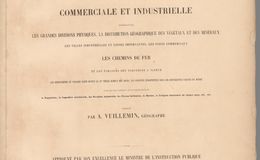
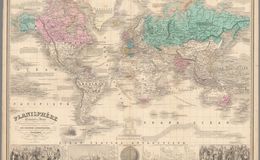
Vuillemin Atlas of 1861
Image ID: 2233
Image ID: 2234
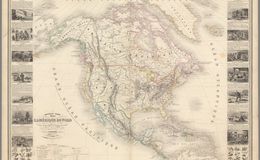
America bought Alaska from Russia in 1867 for $2 million.
https://en.wikipedia.org/wiki/Alaska_Purchase

America bought Alaska from Russia in 1867 for $2 million.
https://en.wikipedia.org/wiki/Alaska_Purchase
Image ID: 2235
"Railway" is Chemin de Fer in French. See red lines on map, primarily along the East coast of the United State.
America did not buy Alaska until 1867. Wikipedia
I find it curious that not one of these vignettes is dedicated the "civilized" or Western populations that no doubt were significant in North America in 1861. No images of New York, Philadelphia, Washington DC.
Image ID: 2236
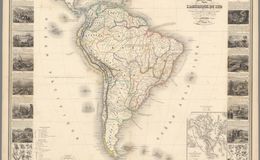
 The Conquest of the Desert was an Argentine military
campaign directed mainly by General Julio Argentino Roca in the 1870s with the
intention of establishing dominance over the Patagonian Desert, inhabited
primarily by indigenous peoples. Under General Roca, the Conquest of the Desert
extended Argentine power into Patagonia.
The Conquest of the Desert was an Argentine military
campaign directed mainly by General Julio Argentino Roca in the 1870s with the
intention of establishing dominance over the Patagonian Desert, inhabited
primarily by indigenous peoples. Under General Roca, the Conquest of the Desert
extended Argentine power into Patagonia.
The Conquest of the Desert was an Argentine military
campaign directed mainly by General Julio Argentino Roca in the 1870s with the
intention of establishing dominance over the Patagonian Desert, inhabited
primarily by indigenous peoples. Under General Roca, the Conquest of the Desert
extended Argentine power into Patagonia.
 There were three Guianas that existed in the 19th century,
the British Guiana, Dutch Guiana and French Guiana. Only one existing today as
an overseas part of the French state is French Guiana.
There were three Guianas that existed in the 19th century,
the British Guiana, Dutch Guiana and French Guiana. Only one existing today as
an overseas part of the French state is French Guiana.
There were three Guianas that existed in the 19th century,
the British Guiana, Dutch Guiana and French Guiana. Only one existing today as
an overseas part of the French state is French Guiana.

The Republic of New Granada, with its capital at Bogotá, lasted from 1831 to 1856.
The Republic of New Granada, with its capital at Bogotá, lasted from 1831 to 1856.
Image ID: 2237
Image ID: 2238
Image ID: 2239

‘Limite de la culture de l’ Olivier’ and ‘Limite de la culture de l’ Oranger’ are lines that represent the northern boundary of the cultivation of Olives and Oranges trees.
‘Limite de la culture de l’ Olivier’ and ‘Limite de la culture de l’ Oranger’ are lines that represent the northern boundary of the cultivation of Olives and Oranges trees.


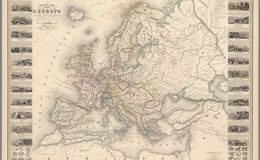
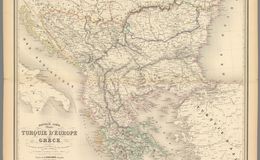
In the 19th century, the process of the decline of Ottoman empire was continuously and then gradually the condition of Turkey became so bad that it came to be called 'sick man of Europe'.
In the 19th century, the process of the decline of Ottoman empire was continuously and then gradually the condition of Turkey became so bad that it came to be called 'sick man of Europe'.
Image ID: 2240
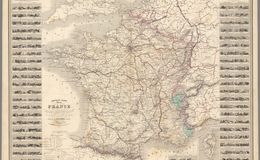
 In the administrative divisions of France, the department is one of the three levels of government under
the national level, between the administrative regions and the communes. Ninety-six
departments are in metropolitan France, and five are overseas departments,
which are also classified as overseas regions. The
departments were created in 1790 as a rational replacement of Ancien
Régimeprovinces with a view to strengthen national unity.
In the administrative divisions of France, the department is one of the three levels of government under
the national level, between the administrative regions and the communes. Ninety-six
departments are in metropolitan France, and five are overseas departments,
which are also classified as overseas regions. The
departments were created in 1790 as a rational replacement of Ancien
Régimeprovinces with a view to strengthen national unity.
In the administrative divisions of France, the department is one of the three levels of government under
the national level, between the administrative regions and the communes. Ninety-six
departments are in metropolitan France, and five are overseas departments,
which are also classified as overseas regions. The
departments were created in 1790 as a rational replacement of Ancien
Régimeprovinces with a view to strengthen national unity.
 Napoleon Bonaparte was born on August 15, 1769, in Ajaccio, on the Mediterranean island of Corsica.
Napoleon Bonaparte was born on August 15, 1769, in Ajaccio, on the Mediterranean island of Corsica.


Loire is a department in Auvergne-Rhône-Alpes occupying the River Loire's upper reaches.
https://en.wikipedia.org/wiki/Loire_(department)
Loire is a department in Auvergne-Rhône-Alpes occupying the River Loire's upper reaches.
https://en.wikipedia.org/wiki/Loire_(department)
Image ID: 2241

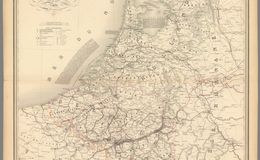
Netherlands literally means "lower countries" in reference to its low elevation and flat topography, with only about 50% of its land exceeding 1 metre (3 ft 3 in) above sea level, and nearly 26% falling below sea level.
Netherlands literally means "lower countries" in reference to its low elevation and flat topography, with only about 50% of its land exceeding 1 metre (3 ft 3 in) above sea level, and nearly 26% falling below sea level.
Image ID: 2242

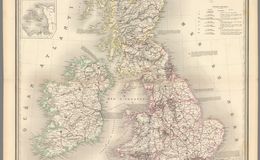
At the time of publication of this atlas on the throne of
the British Kingdom is Queen Victoria. Queen Victoria was Queen of the United
Kingdom of Great Britain and Ireland from 20 June 1837 until her death. Known
as the Victorian era, her reign of 63 years and seven months was longer than
that of any of her predecessors. It was a period of industrial, political,
scientific, and military change within the United Kingdom, and was marked by a
great expansion of the British Empire. In 1876, Parliament voted her the
additional title of Empress of India.
At the time of publication of this atlas on the throne of
the British Kingdom is Queen Victoria. Queen Victoria was Queen of the United
Kingdom of Great Britain and Ireland from 20 June 1837 until her death. Known
as the Victorian era, her reign of 63 years and seven months was longer than
that of any of her predecessors. It was a period of industrial, political,
scientific, and military change within the United Kingdom, and was marked by a
great expansion of the British Empire. In 1876, Parliament voted her the
additional title of Empress of India.
Image ID: 2243

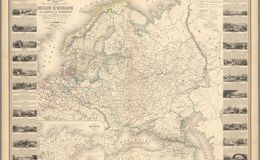
The history of St.-Petersburg-Moscow railway began on 1842 when the emperor Nikolai I signed the decree on construction of the railway between St.-Petersburg and Moscow. A special Committee was established to conduct the works. Research and construction works had been conducted during 10 years and had required significant financial investments, original technical decisions, participation of many Russian and foreign experts and a great amount of manpower. In the railway construction had participated over 800 thousand workers, mostly from serves.
https://en.wikipedia.org/wiki/Saint_Petersburg%E2%80%93Moscow_railway
The history of St.-Petersburg-Moscow railway began on 1842 when the emperor Nikolai I signed the decree on construction of the railway between St.-Petersburg and Moscow. A special Committee was established to conduct the works. Research and construction works had been conducted during 10 years and had required significant financial investments, original technical decisions, participation of many Russian and foreign experts and a great amount of manpower. In the railway construction had participated over 800 thousand workers, mostly from serves.
https://en.wikipedia.org/wiki/Saint_Petersburg%E2%80%93Moscow_railway

Leo Tolstoy, was a Russian writer who is regarded as one of the greatest authors of all time. Born to an aristocratic Russian family in 1828, Tolstoy is best known for the novels War and Peace (1869) and Anna Karenina (1878), often cited as pinnacles of realist fiction.
Leo Tolstoy, was a Russian writer who is regarded as one of the greatest authors of all time. Born to an aristocratic Russian family in 1828, Tolstoy is best known for the novels War and Peace (1869) and Anna Karenina (1878), often cited as pinnacles of realist fiction.
Image ID: 2244
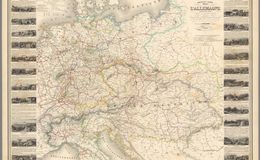
 The Kiel Canal, or Baltic see Canal, formerly known as the
Kaiser-Wilhelm-Canal, is a 98-kilometre-long freshwater canal in the German
state of Schleswig-Holstein. The canal was finished in 1895, but later widened,
and links the North Sea at Brunsbüttel to the Baltic Sea at Kiel-Holtenau.
The Kiel Canal, or Baltic see Canal, formerly known as the
Kaiser-Wilhelm-Canal, is a 98-kilometre-long freshwater canal in the German
state of Schleswig-Holstein. The canal was finished in 1895, but later widened,
and links the North Sea at Brunsbüttel to the Baltic Sea at Kiel-Holtenau.
The Kiel Canal, or Baltic see Canal, formerly known as the
Kaiser-Wilhelm-Canal, is a 98-kilometre-long freshwater canal in the German
state of Schleswig-Holstein. The canal was finished in 1895, but later widened,
and links the North Sea at Brunsbüttel to the Baltic Sea at Kiel-Holtenau.

Nikola Tesla (1856 – 1943), born and raised in the Austrian Empire, was a Serbian-American inventor, electrical engineer, mechanical engineer, and futurist best known for his contributions to the design of the modern alternating current (AC) electricity supply system.
Nikola Tesla (1856 – 1943), born and raised in the Austrian Empire, was a Serbian-American inventor, electrical engineer, mechanical engineer, and futurist best known for his contributions to the design of the modern alternating current (AC) electricity supply system.
Image ID: 2245

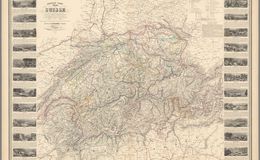
Patek Philippe SA is a Swiss luxury watch and clock manufacturer founded in 1839, located in Canton of Geneva Since 1932, it has been owned by the Stern family in Switzerland. Patek Philippe is one of the oldest watch manufacturers in the world with an uninterrupted watchmaking history since its founding.It designs and manufactures timepieces as well as movements, including some of the most complicated mechanical watches.
Patek Philippe SA is a Swiss luxury watch and clock manufacturer founded in 1839, located in Canton of Geneva Since 1932, it has been owned by the Stern family in Switzerland. Patek Philippe is one of the oldest watch manufacturers in the world with an uninterrupted watchmaking history since its founding.It designs and manufactures timepieces as well as movements, including some of the most complicated mechanical watches.
Image ID: 2246

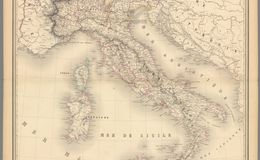
The Papal States, ‘Etat Pontifical”, officially the State of the Church, were a series of territories in the Italian Peninsula under the direct sovereign rule of the pope from the 8th century until 1870.
The Papal States, ‘Etat Pontifical”, officially the State of the Church, were a series of territories in the Italian Peninsula under the direct sovereign rule of the pope from the 8th century until 1870.

After centuries spent as one of the most powerful city-states Republic of Venice lost its independence when Napoleon Bonaparte conquered Venice 1797 during the War of the First Coalition. In 1866, after the Third Italian War of Independence, Venice, along with the rest of the Veneto, became part of the newly created Kingdom of Italy.
After centuries spent as one of the most powerful city-states Republic of Venice lost its independence when Napoleon Bonaparte conquered Venice 1797 during the War of the First Coalition. In 1866, after the Third Italian War of Independence, Venice, along with the rest of the Veneto, became part of the newly created Kingdom of Italy.
Image ID: 2247
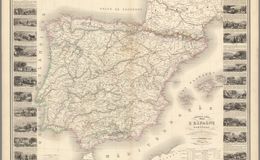
La Mancha region is the birthplace of one of the most famous heroes of Spanish literature, Don Quixote, written by Miguel de Cervantes in the 17th century.

La Mancha region is the birthplace of one of the most famous heroes of Spanish literature, Don Quixote, written by Miguel de Cervantes in the 17th century.

Catalonia is an autonomous community in the northeastern corner of Spain, The capital and largest city, Barcelona is the second-most populated municipality in Spain.
https://en.wikipedia.org/wiki/Catalonia#Industrialisation,_Republic_and_autonomy.
Catalonia is an autonomous community in the northeastern corner of Spain, The capital and largest city, Barcelona is the second-most populated municipality in Spain.
https://en.wikipedia.org/wiki/Catalonia#Industrialisation,_Republic_and_autonomy.
Image ID: 2248

The formal independence of the Serbia, previously part of
the Ottoman Empire, was internationally recognized
at the Congress of Berlin in 1878, which ended the Russo-Turkish War 1877–1878.
The formal independence of the Serbia, previously part of
the Ottoman Empire, was internationally recognized
at the Congress of Berlin in 1878, which ended the Russo-Turkish War 1877–1878.
Image ID: 2249

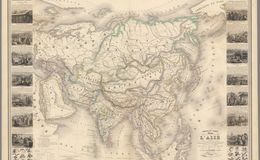
The Opium Wars were two wars waged between Western powers and the Qing dynasty in the mid-19th century. The First Opium War, fought in 1839–1842 between Great Britain and the Qing Dynasty, was triggered by the Qing’s crackdown on British Opium smugglers. The Second Opium War was fought between Britain and France coalition against the Qing in 1856–1860. In each war, the European force's modern military technology led to an easy victory over the Qing forces, with the consequence that the government was compelled to grant favorable tariffs, trade concessions, and territory to the Europeans.
The Opium Wars were two wars waged between Western powers and the Qing dynasty in the mid-19th century. The First Opium War, fought in 1839–1842 between Great Britain and the Qing Dynasty, was triggered by the Qing’s crackdown on British Opium smugglers. The Second Opium War was fought between Britain and France coalition against the Qing in 1856–1860. In each war, the European force's modern military technology led to an easy victory over the Qing forces, with the consequence that the government was compelled to grant favorable tariffs, trade concessions, and territory to the Europeans.

East India Company was an English and later British joint-stock company founded in 1600.[4] It was formed to trade in the Indian Ocean region, initially with the East Indies (the Indian subcontinent and Southeast Asia), and later with Qing China. The company seized control of large parts of the Indian subcontinent, colonised parts of Southeast Asia and Hong Kong after the First Opium War, and maintained trading posts and colonies in the Persian Gulf Residencies.
East India Company was an English and later British joint-stock company founded in 1600.[4] It was formed to trade in the Indian Ocean region, initially with the East Indies (the Indian subcontinent and Southeast Asia), and later with Qing China. The company seized control of large parts of the Indian subcontinent, colonised parts of Southeast Asia and Hong Kong after the First Opium War, and maintained trading posts and colonies in the Persian Gulf Residencies.
Image ID: 2250

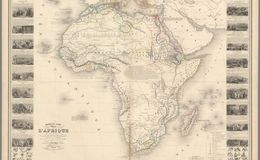
Expeditions exploring Southern Africa were made during the 1830s and 1840s, so that around the midpoint of the 19th century and the beginning of the colonial Scramble for Africa, the unexplored parts were now limited to what would turn out to be the Congo Basin and the African Great Lakes.
Expeditions exploring Southern Africa were made during the 1830s and 1840s, so that around the midpoint of the 19th century and the beginning of the colonial Scramble for Africa, the unexplored parts were now limited to what would turn out to be the Congo Basin and the African Great Lakes.

The Gold Coast was a British Crown Colony on the Gulf of Guinea in West Africa from 1821 to its independence as part of the nation of Ghana in 1957.
The Gold Coast was a British Crown Colony on the Gulf of Guinea in West Africa from 1821 to its independence as part of the nation of Ghana in 1957.

The Suez Canal is an artificial sea-level waterway in Egypt, connecting the Mediterranean Sea to the Red Sea through the Isthmus of Suez; and dividing Africa and Asia. Constructed by the Suez Canal Company between 1859 and 1869, it officially opened on 17 November 1869.
The Suez Canal is an artificial sea-level waterway in Egypt, connecting the Mediterranean Sea to the Red Sea through the Isthmus of Suez; and dividing Africa and Asia. Constructed by the Suez Canal Company between 1859 and 1869, it officially opened on 17 November 1869.
Image ID: 2251

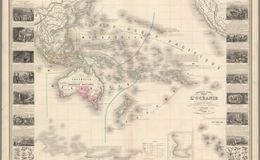
Bushrangers were originally escaped convicts in the early years of the British settlement of Australia who used the bush as a refuge to hide from the authorities. By the 1820s, the term had evolved to refer to those who took up "robbery under arms" as a way of life, using the bush as their base.
Bushrangers were originally escaped convicts in the early years of the British settlement of Australia who used the bush as a refuge to hide from the authorities. By the 1820s, the term had evolved to refer to those who took up "robbery under arms" as a way of life, using the bush as their base.

Bakumatsu refers to the final years of the Edo period when the Tokugawa shogunate ended. Between 1853 and 1867, Japan ended its isolationist foreign policy known as sakoku and changed from a feudal Tokugawa shogunate to the modern empire of the Meiji government. The major ideological-political divide during this period was between the pro-imperial nationalists called ishin shishi and the shogunate forces, which included the elite shinsengumi swordsmen.
Bakumatsu refers to the final years of the Edo period when the Tokugawa shogunate ended. Between 1853 and 1867, Japan ended its isolationist foreign policy known as sakoku and changed from a feudal Tokugawa shogunate to the modern empire of the Meiji government. The major ideological-political divide during this period was between the pro-imperial nationalists called ishin shishi and the shogunate forces, which included the elite shinsengumi swordsmen.